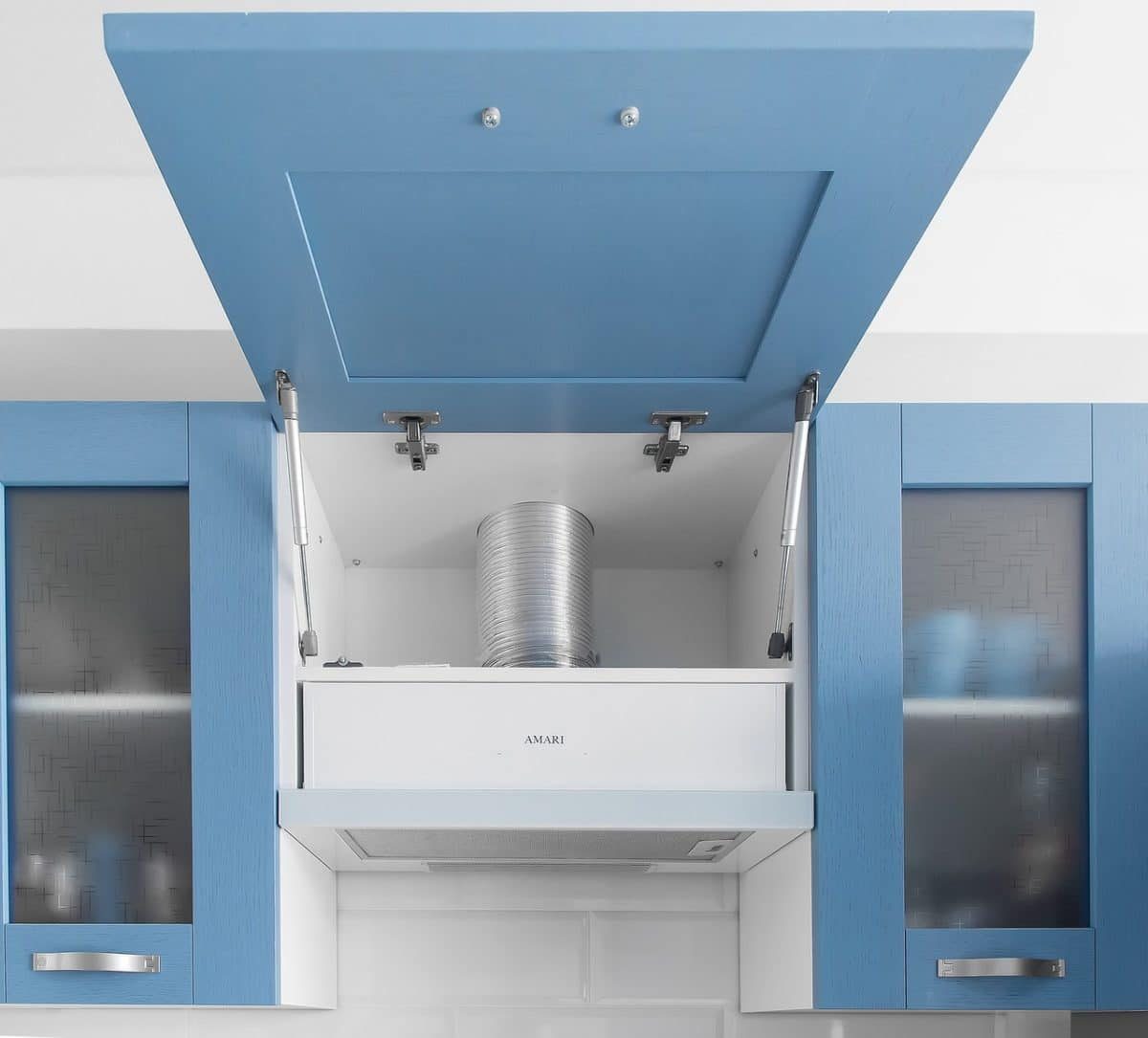
In the world of kitchen appliances, the hood is an essential piece of equipment to ensure a pleasant and healthy cooking environment. While motorized hoods dominate the market due to their ability to actively suck up smoke and odors, the non-motorized hood also deserves consideration.
The operation of motorized hoods
Motorized hoods are equipped with fans that suck in stale air, smoke, and odors from the kitchen to expel them outside or filter them before returning them to the room. This active system allows for effective processing of a large volume of air, which is particularly useful when cooking dishes that require a lot of heat or grease.
However, this efficiency comes at a cost. Motorized hoods consume energy, require regular maintenance (cleaning filters, checking the motor), and can be noisy, which may detract from the cooking experience.
The impact of the non-motorized hood
Unlike its motorized counterparts, the non-motorized hood relies on the principles of natural ventilation. By not having an active suction system, it creates an open space above the cooking area, allowing air to circulate freely. This can be effective in well-ventilated kitchens where fresh air can easily enter.
Advantages and disadvantages of each type of hood
-
Efficiency:
- Motorized hood: Very effective at eliminating smoke and odors, especially during intensive cooking. Suitable for kitchens where fatty foods are frequently prepared.
- Non-motorized hood: Effective in airy environments, but may not be sufficient for kitchens with high steam loads.
-
Costs:
- Motorized hood: More expensive to purchase and install, not to mention operating costs.
- Non-motorized hood: Less expensive to purchase, simplified installation, and no energy consumption.
-
Maintenance:
- Motorized hood: Requires regular maintenance to ensure its efficiency.
- Non-motorized hood: Minimal maintenance, mainly surface cleaning.
-
Aesthetics:
- Motorized hood: Variety of designs, but can appear bulky in some spaces.
- Non-motorized hood: Minimalist design that integrates well into various decors.
In summary, the choice between a motorized hood and a non-motorized hood largely depends on the specific needs of each user. For those who cook regularly and produce a lot of smoke, a motorized hood is often the best option. On the other hand, for less intensive kitchens or when aesthetics and cost are determining factors, the non-motorized hood proves to be an effective solution. Considering the characteristics of each type of hood is essential to make the best choice suited to one’s culinary environment.