
GM Vet 1 operates in full web mode, without local installation. Access is through a browser via the portal vet1.gmvet.net, compatible with Mac, PC, and Linux. However, this apparent simplicity hides several friction points during the very first connection: blocking reCAPTCHA, poorly assigned rights, incompatible browser.
This guide details the technical steps that actually pose problems, focusing on what the official tutorials gloss over.
Portal vet1.gmvet.net: technical prerequisites before connecting
Before even entering an identifier, the workstation configuration determines the success of the connection. GM Vet 1 requires a stable Internet connection at all times, including during consultations. A network interruption while entering data can lead to a loss of unsaved data.
The portal relies on centralized identity management protected by reCAPTCHA. This anti-bot mechanism sometimes blocks access when the browser is using a VPN, an aggressive ad blocker, or an outdated version.
- Temporarily disable extensions like uBlock Origin or AdBlock Plus on the login page, as they interfere with the reCAPTCHA script.
- Use a recent browser (Chrome, Firefox, Edge in their latest versions) and clear the cache if the login page does not load properly.
- Check that your firewall or corporate proxy is not blocking the domains google.com and gstatic.com, which are necessary for reCAPTCHA to function.
Successfully completing your first connection to GM Vet 1 requires overcoming these technical obstacles in advance, or risk getting stuck on the authentication screen.
Personal identifiers and user roles in GM Vet 1
Each team member must have a personal identifier. Sharing the same account among veterinarians, specialized veterinary assistants (ASV), or substitutes compromises the traceability of actions and skews the clinic’s individual indicators.
Access rights are directly linked to the role assigned during the user account creation. The table below compares the main differences in rights according to the profile.
| User Profile | Access to medical records | Stock management | Structure settings |
|---|---|---|---|
| Lead Veterinarian | Full (read/write) | Full | Full |
| Substitute Veterinarian | Full (read/write) | Read only | None |
| ASV / Assistant | Read only | Full | Limited (scheduling) |
| Secretariat | None | None | Limited (appointments) |
A poorly assigned profile generates immediate blockages. If a substitute cannot modify a patient record, the problem rarely stems from a bug: it is the assigned role that limits their rights.
Creating a user with the correct rights from the start
Creation is done from the account management module in GM Vet 1. The structure manager enters the name, professional email address, and selects the role. The new user then receives an activation email with a temporary link.
This link expires after a defined period. If the collaborator does not use it in time, the invitation must be resent from the administration panel. Also, check that the email has not landed in the spam folder, a common issue with Outlook or Gmail-type mail services.
Pilepoils synchronization and appointment booking activation
GM Vet 1 interfaces with the Pilepoils back office for managing online appointment bookings. Activating this synchronization is a distinct step from creating the account. Having a functional identifier does not mean the profile is visible to clients online.
The procedure requires activating and then synchronizing each team member individually. However, the desynchronization of a member (departure, end of substitution) is also managed from this same module, without affecting other accounts.
Setting up activities and consultation reasons
Once synchronization is established, the activities offered online must be defined: general consultation, vaccination, surgery, emergency. Each activity is associated with a duration and one or more practitioners.
- Associate each consultation reason with a realistic time slot. A dermatology consultation does not last as long as a vaccination reminder.
- Limit the number of reasons visible online to avoid overwhelming the client. Internal reasons (post-operative follow-up, check-up) can remain accessible only by phone.
- Add the activities to the schedule of each relevant practitioner; otherwise, no time slots will display for clients.
Troubleshooting common blockages during the first connection
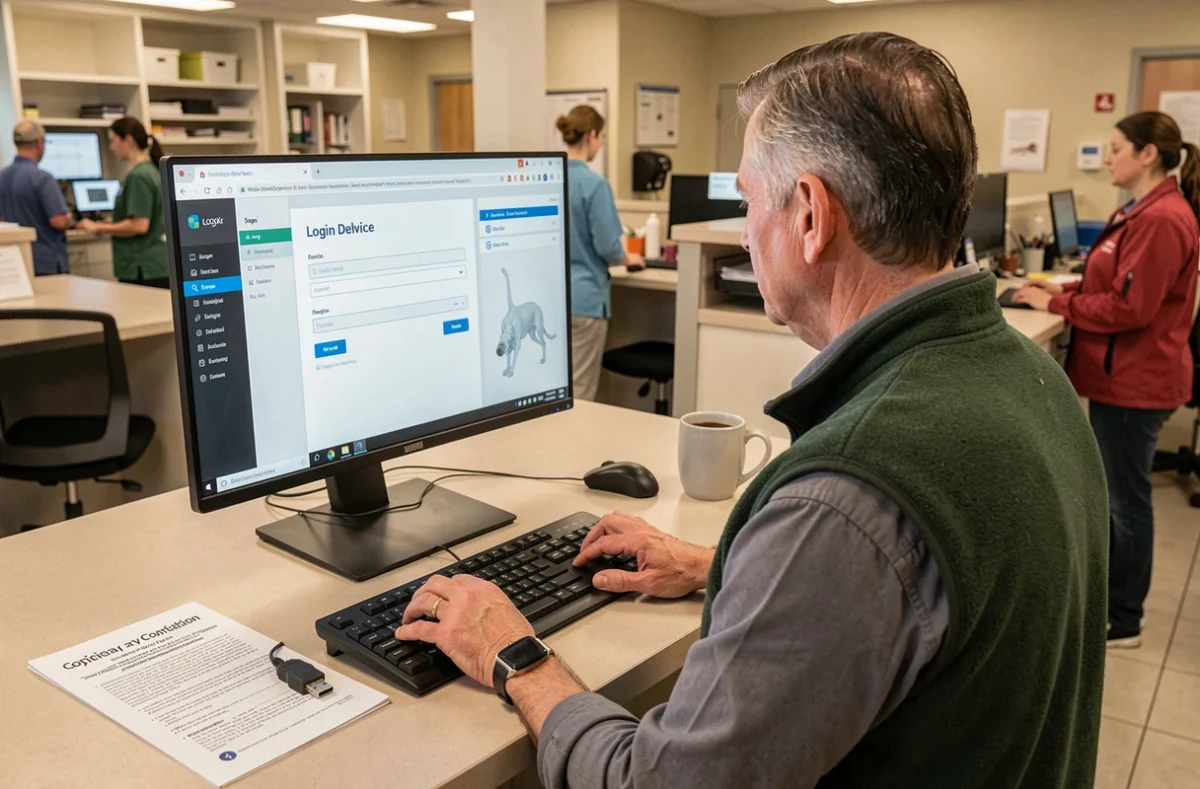
Recurring problems during the first connection follow identifiable patterns. The looping reCAPTCHA is the most frequent blockage, followed by the expired activation link and insufficient rights.
The looping reCAPTCHA is usually resolved by changing the browser or disabling the VPN. If the problem persists, testing from a mobile network (tethering) helps isolate a blockage related to the clinic’s network.
For the expired activation link, only an administrator of the structure can resend the invitation. The blocked collaborator cannot regenerate the link themselves. Anticipating this point by advising newcomers to click on the link on the same day they receive it avoids many back-and-forths.
Insufficient rights after a successful connection
Logging in does not guarantee access to all modules. A blank screen or a truncated menu indicates a poorly configured user role, not a software malfunction. Correction is done through the administration panel, accessible only to the structure manager.
Check the role assigned in the user table and compare it with the expected rights. A simple modification of the profile, without recreating the account, is enough to restore access to the missing modules.
The success of a first connection to GM Vet 1 depends less on entering the password than on preparing the workstation, correctly assigning roles, and understanding the link between Pilepoils synchronization and online visibility. Addressing these three points before D-Day significantly reduces calls to technical support.