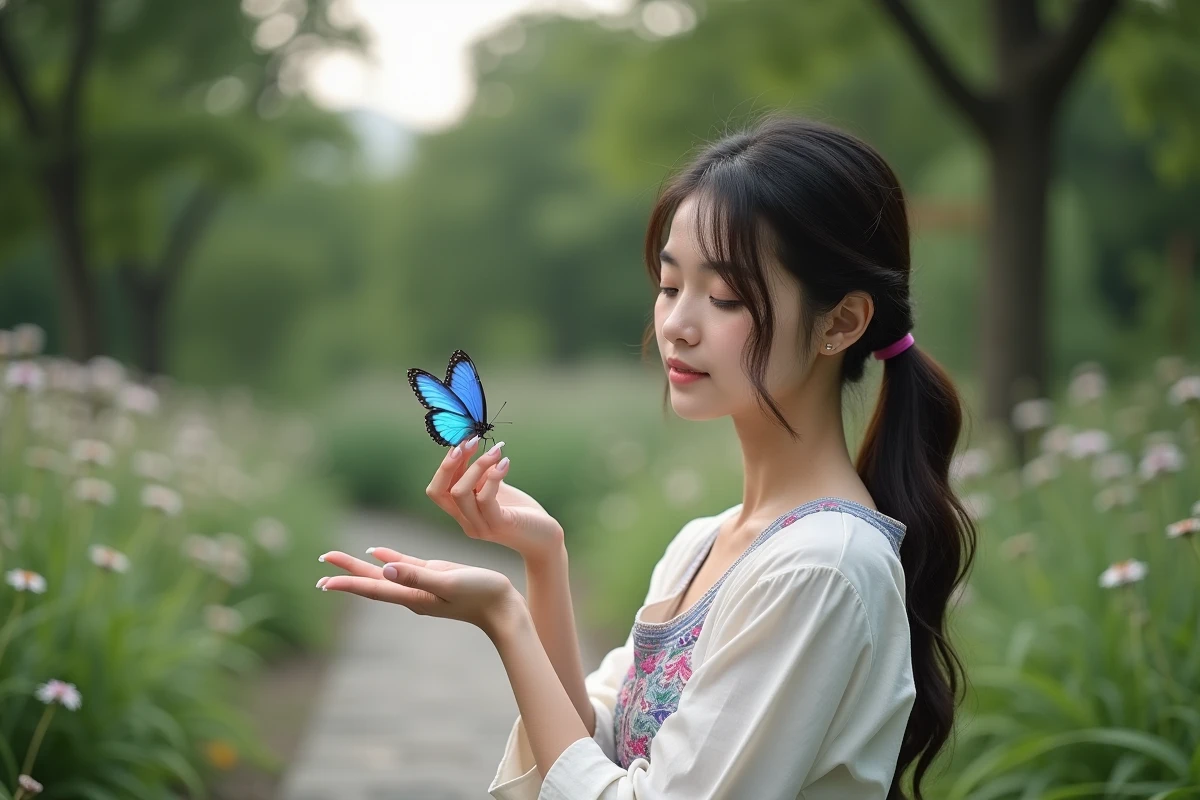
A symbol can cross borders without ever retaining the same meaning. Some cultures view blue as a color of mourning, while others see it as a sign of hope or protection. Between ancient beliefs and modern interpretations, the association of a natural motif with a spiritual dimension obeys no universal rules.
The diversity of interpretations reveals striking contradictions, sometimes within the same culture. The meanings attributed to this insect vary according to historical contexts, beliefs, and traditions. What is a sign of happiness in one place becomes a harbinger of transformation elsewhere, without ever losing its power to fascinate.
The blue butterfly, a fascinating messenger between nature and mystery
The blue butterfly is not limited to daydreaming or embellishing stories: it intrigues, captivates, and prompts questions. Scientists study it, artists draw inspiration from it, and its appearance, particularly in the form of the Morpho menelaus, leaves no one indifferent. When it spreads its wings, it is a burst of azure that suspends time. But the story of the butterfly does not stop at its beauty. Its life cycle, from caterpillar to chrysalis, then to flight, tells a tale of total metamorphosis, where each stage is crossed with no possibility of return.
This process embodies, in itself, the power of change. The meaning of the blue butterfly escapes simple naturalistic observation: it becomes a messenger, a link between what is seen and what eludes reason. Depending on the cultures, it embodies the idea of rebirth, hope, and sometimes luck. Whether one thinks of the Monarch butterfly, the Red Admiral, or the Peacock butterfly, each carries a story, but it is the blue that reveals this alliance of fragility and strength, a beauty that commands silence.
The colors of butterflies are never trivial. They strike the memory: white for purity, black for mystery, red for passion, orange for creativity. Blue, on the other hand, is associated with awakening, healing, and an invisible protection. Societies project their desires, fears, and hopes onto it. Observing a blue butterfly is confronting the idea that every change, even subtle, can herald a new momentum.
Why does the blue butterfly intrigue so much? Hidden symbolisms across cultures
The blue butterfly fascinates because it escapes categories. Its color, rare and almost unreal, disrupts expectations. Throughout the ages, societies have attributed a thousand powers to it, weaving unique stories around it. The symbolism and myths place it at the heart of a universal dialogue about transformation, freedom, or fragility.
In Greek mythology, Psyche, the human soul, takes the form of a butterfly. It then becomes a symbol of vital breath, rebirth, and the quest for freedom. In the time of the Aztecs, the butterfly is associated with Itzpapalotl, a feminine figure both feared and protective. In China, it evokes indestructible love, as in the tragedy of Liang Zhu. In Japan, it appears in tales, bearer of happy transformations or favorable coincidences.
Spirituality is not left out. In Christianity, the metamorphosis of the butterfly resonates as an allegory of resurrection. Buddhism and Taoism see the blue butterfly as a guide to inner peace, freedom of spirit, or a bridge between realms. The colors themselves receive precise interpretations: white for purity, black for secrecy, red for vital energy, orange for inventiveness, yellow for hope, green for healing, brown for grounding. But it is blue that captures attention, suggesting happy transformation, renewed hope, and fragile beauty that never imposes itself but leaves a deep mark.
Here are the main symbolic themes attributed to the blue butterfly across cultures:
- Happy transformation: at the heart of the blue butterfly’s symbolism, wherever it goes.
- Hope and luck: it embodies the discreet arrival of a new period, full of promises.
- Inner rebirth: it invites one to bounce back, to renew oneself, to overcome obstacles differently.
From the American continent to Asia, in art, tattoos, or childhood memories, the meaning of the blue butterfly is constantly reinventing itself. It reminds us that the most vivid beauty is sometimes the most vulnerable, and that every transformation carries a part of the unexpected.
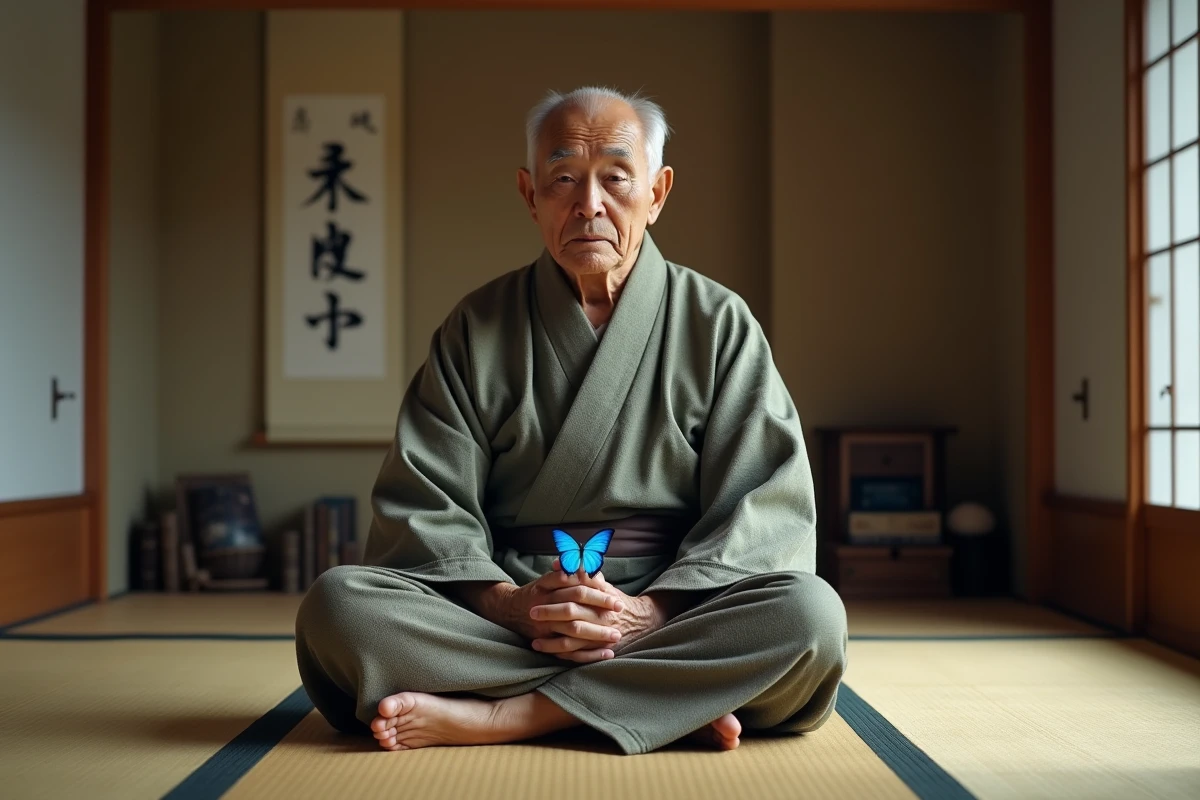
Exploring the spiritual dimension of the blue butterfly: transformation, hope, and signs of the invisible
Over time, the blue butterfly asserts itself as a spiritual messenger. Its presence, often brief and unpredictable, intrigues and leaves a mark on minds. The transformation from caterpillar to chrysalis, then to adult butterfly, condenses the idea of a deep mutation, experienced both in body and spirit. The Morpho menelaus is its most famous embodiment, with its changing reflections and almost magical light, a reflection of inner rebirth.
In many traditions, this butterfly becomes a symbol of hope and spiritual healing. For some, it is a bridge between worlds, bearer of messages from the invisible. It appears in moments of rupture, mourning, and transformation, as a promise of growth and renewal. Some see it as the expression of a discreet guidance, a presence that watches over or a message conveyed without a word.
Below are the aspects most often associated with this insect in the spiritual realm:
- Hope: the blue butterfly represents the certainty that a new era is rising, even when everything seems frozen.
- Happy transformation: its metamorphosis reminds us that every change carries the possibility of a new beginning.
- Messenger of the invisible: in popular imagination, the arrival of the blue butterfly is seen as a sign of protection or benevolent guidance.
The unique silhouette of the blue butterfly, its discreet light, invites us to question the boundaries of the visible and to perceive the sign even when logic hesitates. Wherever it goes, it leaves behind the vibrant idea of a possibility, and a elsewhere to explore.