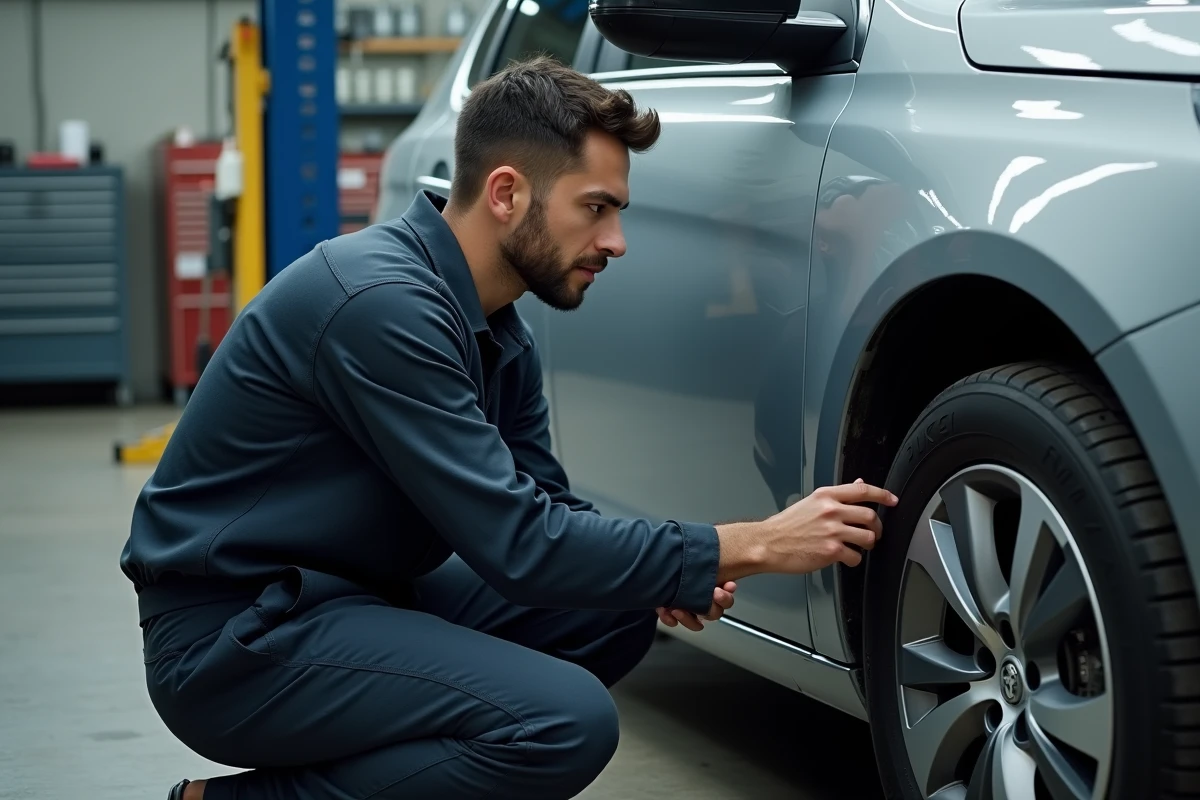
On the Peugeot 308, a central locking system that is unresponsive does not always indicate a faulty electrical component. We regularly observe in the workshop vehicles whose central locking malfunctions due to a simple mechanical defect in the door or tailgate, mistakenly interpreted as an electronic failure. Identifying the true origin of the problem avoids unnecessary parts replacements and wasted diagnostic hours.
Door or tailgate misalignment simulating an electronic failure on Peugeot 308
The BSI of the 308 refuses to lock the vehicle as long as it detects an improperly closed opening. This safety behavior is normal. The problem arises when a door open sensor remains active even though the door appears closed.
A play of a few millimeters on a rear door latch or a slightly misaligned tailgate is enough to keep the switch in the “open” position. The driver presses the remote, nothing happens, and the reflex is to suspect the key, the receiver, or a fuse. We recommend first checking if the dashboard or multimedia screen displays an open opening icon.
To distinguish an adjustment problem from an electrical failure, the method is straightforward: close each door individually by pressing firmly, then attempt to lock after each one. If the central locking works after slamming a specific door harder, the defect is mechanical. It is then necessary to examine the latch, hinges, and corresponding door seal.
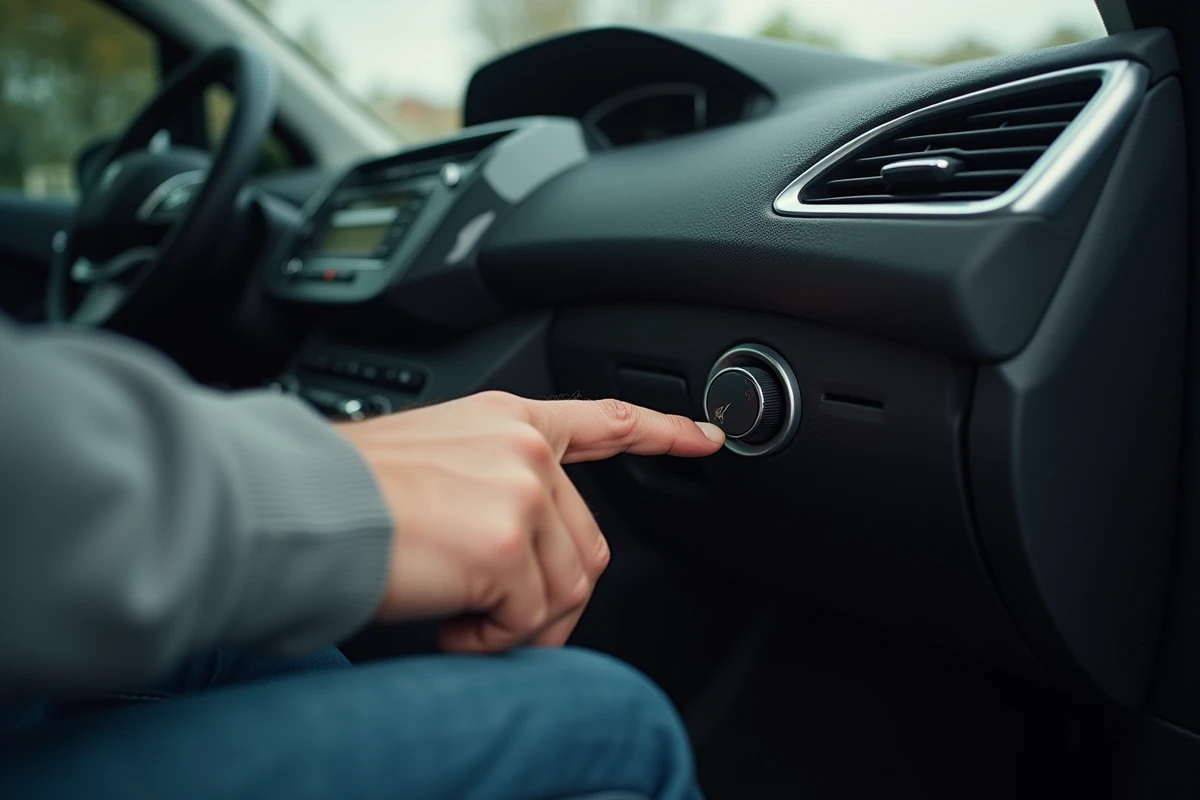
The 2022 manufacturer recall for the Peugeot 308 specifically concerned a problem with poorly closing doors, confirming that the defect can be structural in certain generations and not just isolated wear. An article detailing the causes of the central locking problem on Peugeot 308 allows for a deeper diagnosis based on the vehicle’s generation.
Central locking failure 308: isolate the transmitter from the receiver
When the defect is not mechanical, it is necessary to segment the control chain. The most common mistake is replacing the remote control when the problem lies with the lock motor or the BSI.
First step: test the locking from the interior button of the vehicle. If the doors lock from the cabin but not from the key, the problem is on the transmitter side (remote battery, key synchronization with the vehicle). If no command works, neither the remote nor the interior button, the defect is on the receiver side or downstream.
- Remote battery replacement as a priority: this is the simplest and most often overlooked cause, especially on card keys that do not always signal a low battery
- Key resynchronization after vehicle battery replacement: on the 308, a prolonged battery disconnection can unpair the remote from the BSI
- Testing the driver door switch: this micro-switch controls the central locking via the cylinder, and its wear causes random activations
- Checking the fuse dedicated to central locking in the cabin fuse box: a blown fuse cuts power to all lock motors simultaneously
Vehicle battery and BSI comfort logic on Peugeot 308
A battery at the end of its life does not only cause difficult starts. On the 308, the BSI intentionally cuts certain comfort functions to preserve energy, and central locking is part of this.
The typical symptom: the car locks normally when warm, after a trip, but refuses to respond to the remote after a night of parking. The BSI detects a battery voltage that is too low and disables the key’s radio reception to save power. The driver finds themselves in front of a vehicle seemingly malfunctioning in central locking when the system is actually functioning correctly; it is simply in sleep mode.
This behavior is documented on community forums for the 308, particularly on 2018 models where owners report that the key “no longer works” after a few hours of parking. Turning on the ignition by physically inserting the key into the cylinder reactivates the system, confirming the diagnosis of under-voltage.

Recurring defect or one-time failure: adapt the diagnosis to the generation of 308
The diagnosis is not conducted in the same way depending on whether one is dealing with a first-generation 308 (T7), a phase 2, or the P5 generation launched in 2021. The lock motors and the multiplexed network differ significantly from one generation to another.
On the T7, the pull-type lock motors are a known weak point. The internal mechanism seizes over time, causing partial locking where some doors respond and others do not. On the P5 generation, the system is more integrated into the CAN network, and a communication failure between the BSI and a door module can block the entire locking without any individual component being faulty.
- On T7: prioritize checking individual lock motors and the driver cylinder switch
- On phase 2 (T9): the tailgate sensor and rear latch are sensitive points, directly related to the manufacturer recall
- On P5: a diagnostic check with CAN frame reading is often necessary to identify a silent door module on the network
A one-time problem that disappears after restarting the vehicle points to a battery voltage issue or BSI software. A reproducible defect with each locking attempt indicates a mechanical component or a lock motor. This simple distinction, often overlooked initially, prevents ordering a BSI costing several hundred euros for a detached door seal.