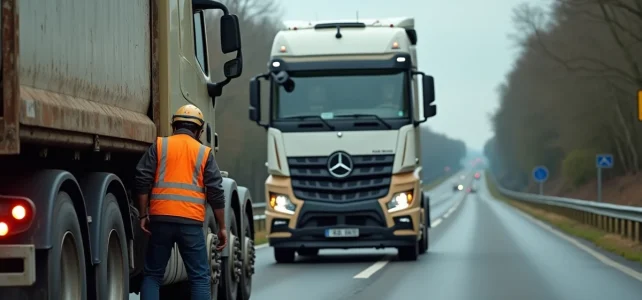
A heavy truck immobilized on a fast lane does not pose the same problem as a utility vehicle running out of fuel. Heavy-duty towing involves vehicles over 26 tons of GVW, auxiliary cranes, and coordination with infrastructure managers that is nothing like light roadside assistance. Understanding the technical constraints of this sector allows transporters to reduce immobilization and control associated costs.
Recovery of Accidented Heavy Trucks: The Skill That Conditions Everything Else
The recovery of a tipped or overturned truck is the most demanding intervention in the sector. A 40-ton semi-trailer lying in a ditch requires at least a mobile crane with a telescopic boom capable of working at a low angle, often combined with a second stabilization vehicle.
This operation differs from classic towing by its level of risk. A poorly conducted recovery can irreversibly damage the chassis structure, turn a recoverable cargo into a total loss, or cause a secondary accident on the roadway. The qualification of operators, their knowledge of specific anchoring points for each manufacturer (DAF, Renault Trucks, Scania, MAN), and the sizing of lifting equipment are the three variables that determine success.
Most articles on the subject treat recovery as a simple preliminary step to towing. In practice, it is the opposite: recovery represents the majority of intervention time and total cost when a vehicle is involved in an accident. A transporter negotiating an assistance contract should ensure that their provider has at least one high-capacity crane in-house, rather than subcontracting this phase to a third party.
The stakes related to heavy-duty towing in France require a clear distinction between recovery, on-site assistance, and towing to a workshop.
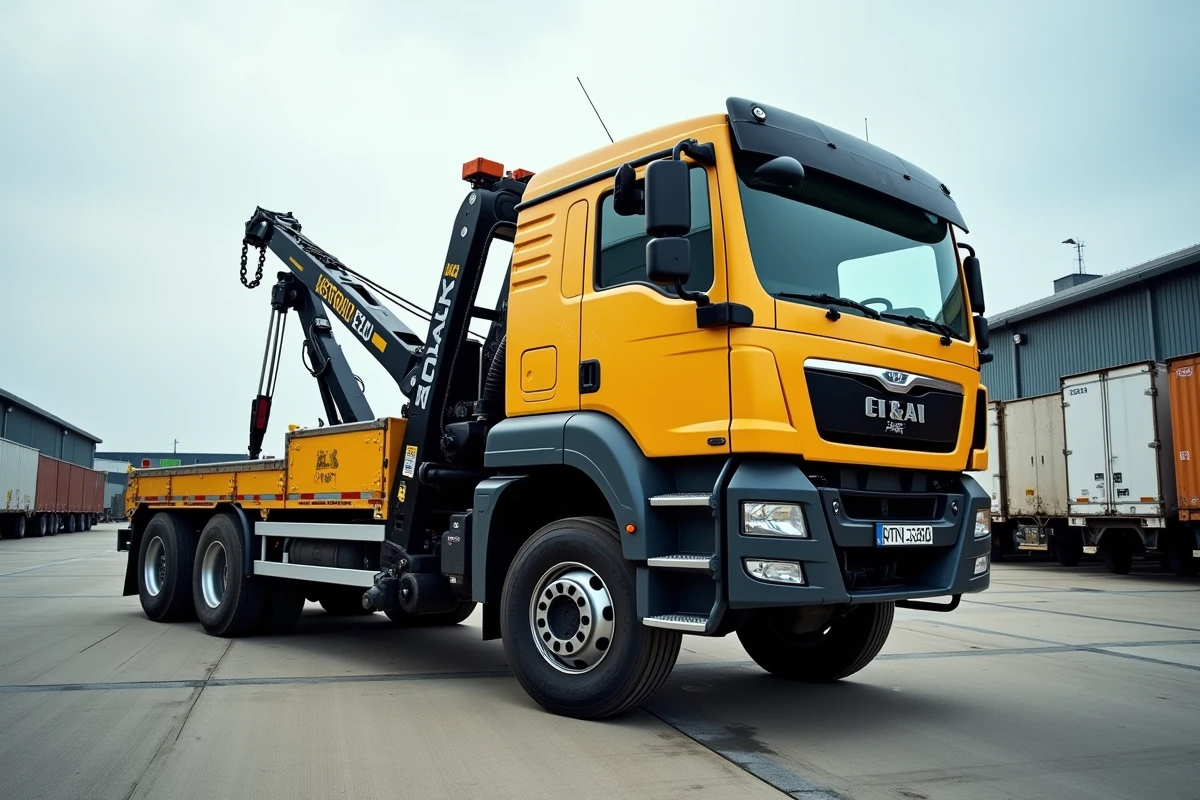
On-Site Mechanical Assistance: Reducing the Actual Towing Rate
A truck that is immobilized does not always need to be towed. The underlying trend among specialized providers is to send a technician equipped to diagnose and repair directly at the roadside. Battery replacement, hydraulic hose replacement, AdBlue circuit purging, engine sensor recalibration: these quick interventions allow the vehicle to be back in circulation without mobilizing a heavy tow truck.
Every avoided tow represents several hours of immobilization less for the transporter, not to mention the cost of the flatbed tow truck or specific hitch. It is preferable to prioritize providers that include an “on-site repair” component in their offer, with a stocked inventory of common parts (filters, belts, power fuses, common tires).
This logic of complete roadside assistance also changes the profile of the responders. A simple tow truck driver is no longer sufficient. Technicians must be capable of reading an electronic diagnosis on the CAN buses of Euro VI engines, distinguishing a software failure from a mechanical failure, and deciding within minutes whether the vehicle can continue or needs to be towed.
Signage and Safety for Highway Interventions
The French regulatory framework imposes very strict signage requirements for any intervention on highways or expressways. Temporary signage must be placed upstream of the immobilized vehicle, according to distances that vary based on the speed limit on the affected section.
- The first emergency signage (cones, triangles, flashing lights) is the responsibility of the heavy truck driver as soon as it is immobilized, even before the tow truck arrives.
- The towing provider then deploys enhanced signage (AK5 type signs, illuminated diversion arrows) in accordance with the requirements of the infrastructure manager (DIRCE, SANEF, Vinci Autoroutes depending on the network).
- Any recovery or towing operation that encroaches on a traffic lane requires a coordinated lane closure with the highway control center, which extends the intervention time but ensures the safety of all.
Failure to comply with signage exposes the provider and the transporter to administrative penalties, but above all to liability in the event of a secondary accident. This point is often underestimated in provider comparisons, which focus on arrival times without mentioning compliance with safety procedures.

Pooling of Towing Fleets: Heavy Trucks, Buses, and Construction Equipment
The most structured operators are now pooling their resources across several segments: heavy trucks, coaches, urban buses, agricultural machinery, and public works equipment. This approach responds to a simple economic logic. A crane capable of recovering a semi-trailer can also intervene on a combine harvester or a construction dump truck, which improves equipment utilization rates and reduces the marginal cost of each intervention.
For a heavy truck fleet manager, the indirect benefit is geographical coverage. A provider that also operates in the construction or agricultural segment generally has intervention bases spread over a larger territory, including rural areas where specialized heavy-duty tow trucks are rare.
This territorial coverage criterion should be integrated into the specifications of an assistance contract. A guaranteed response time is only valuable if the provider can effectively position an appropriate vehicle within the announced radius, day or night.
Heavy Truck Assistance Contract: Clauses to Check
Selecting a towing provider is not limited to the hourly rate. Several clauses in the assistance contract directly condition the quality of service in real situations:
- The guaranteed intervention perimeter (kilometric radius, highway coverage, cross-border intervention for international flows).
- The actual availability of heavy equipment (cranes, low loaders, hitches for semi-trailers) as opposed to a simple promise of telephone standby.
- The contractual arrival times on site, with or without penalties for delays.
- The provision for the custody of the vehicle and its cargo between immobilization and final repair.
A well-drafted contract also clearly distinguishes the rates for on-site assistance, simple towing, and recovery, as the cost differences between these three services are considerable. Bundling these items into a single package often masks an overcharging for regular assistance in favor of a smoothed recovery rate.
The choice of heavy-duty towing provider impacts the operational continuity of the fleet. A transporter who treats this item as a simple line of administrative expense exposes themselves to prolonged immobilizations and hidden costs far exceeding the savings made on the initial contract.