
When night falls, your cat’s behavior and needs can differ significantly from those during the day. Providing an environment conducive to restorative sleep is essential for their well-being. Creating a cozy space, maintaining a stable routine, and considering the natural nocturnal habits of felines contribute to improving their nighttime comfort. It is also crucial to ensure the safety of the sleeping area to prevent accidents or potential escapes. Experts recommend various strategies to optimize the rest of these four-legged companions during the night.
Creating a Sleep-Friendly Environment for Your Cat
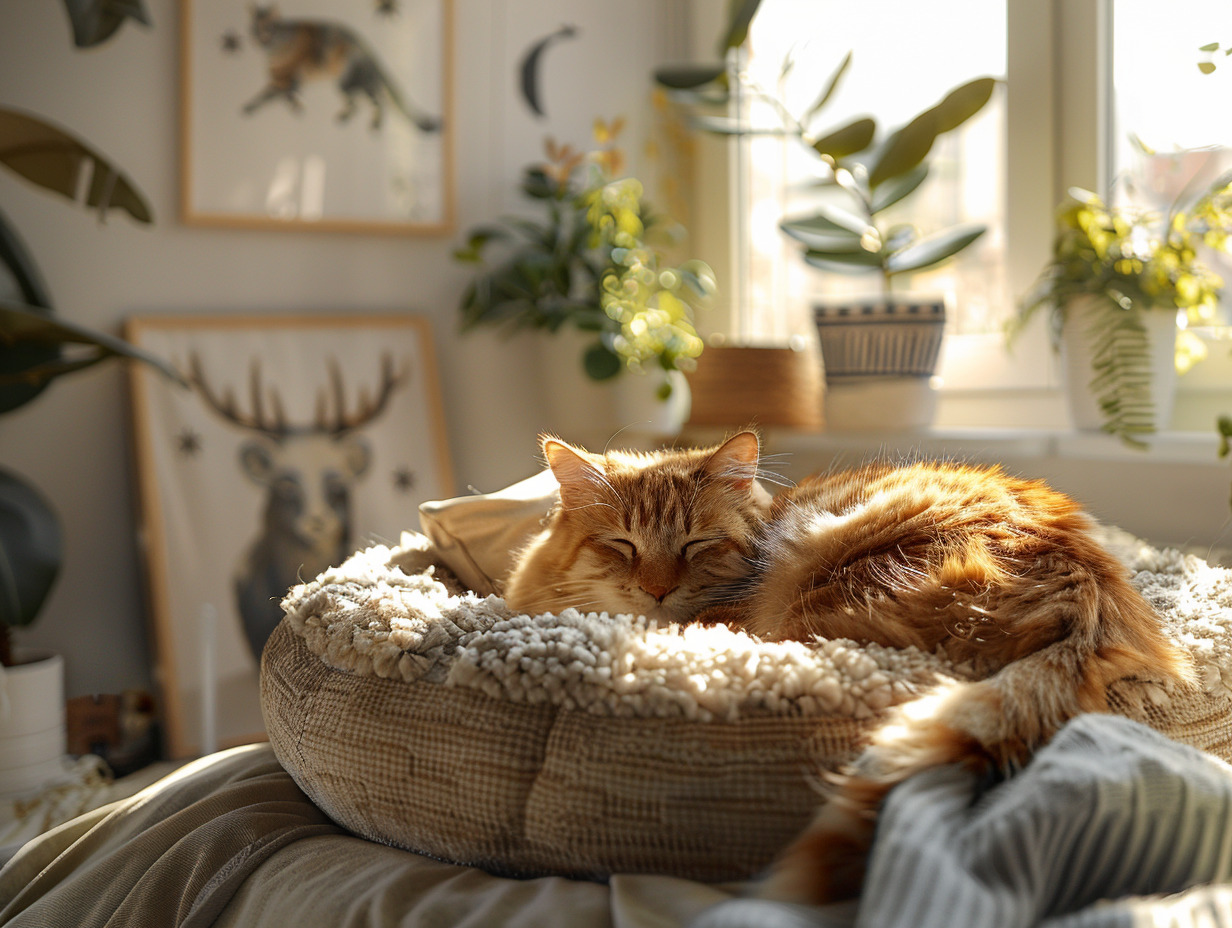
Comfort and Safety: Nocturnal meowing, often a sign of a call to play, can disrupt the family’s sleep. To prevent these unexpected awakenings, set up a resting area for your cat where comfort and safety are the key words. A cozy cushion in a quiet corner of the house, away from foot traffic, invites them to relax and sleep peacefully.
Managing Meowing: Using objects like the Eyenimal Miaow Control meowing torch can be effective in discouraging your cat from meowing at night. This device emits ultrasonic sounds that are inaudible to the human ear, reducing nighttime solicitations without causing stress or anxiety in the animal.
Light or Darkness: Regarding whether to leave the light on for a cat at night, you should remember that cats are primarily nocturnal animals. They see very well in the dark. Therefore, it is unnecessary to leave a light on for them. By allowing them to enjoy their natural nighttime environment, you promote their independence and tranquility.
Daytime Stimulation: Cat toys are an effective way to channel their energy and stimulate their hunting instinct. By providing them with toys during the day, you increase the chances that they will expend their energy and be more inclined to sleep at night. Offer them a variety of interactive objects to maintain their interest and reduce the risk of them soliciting their owner to play at inappropriate hours.
Establishing a Nighttime Routine for a Calm Cat
Bedtime Routine: For the nights to be restorative for both the owner and the animal, you need to establish a bedtime routine. This can include a final play session followed by a treat, signaling to the cat that it’s time to rest. Stick to this sequence of activities every evening so that the cat incorporates these time markers into its biological rhythm.
Evening Meal: A meal served at a fixed time each evening contributes to the routine and helps calm the cat. Benoit Sery, a feline behaviorist, emphasizes the effectiveness of a substantial meal before nightfall to reduce the cat’s nighttime activity. Indeed, a satisfied cat will be less likely to seek attention and meow.
Exercise and Non-Reaction: During the day, ensure that the cat gets enough exercise to expend its energy. This promotes calmer sleep during the night. If the cat meows, do not react immediately. A non-reaction prevents positively reinforcing the behavior of nighttime solicitation. The cat will gradually understand that night is not a suitable time for play.