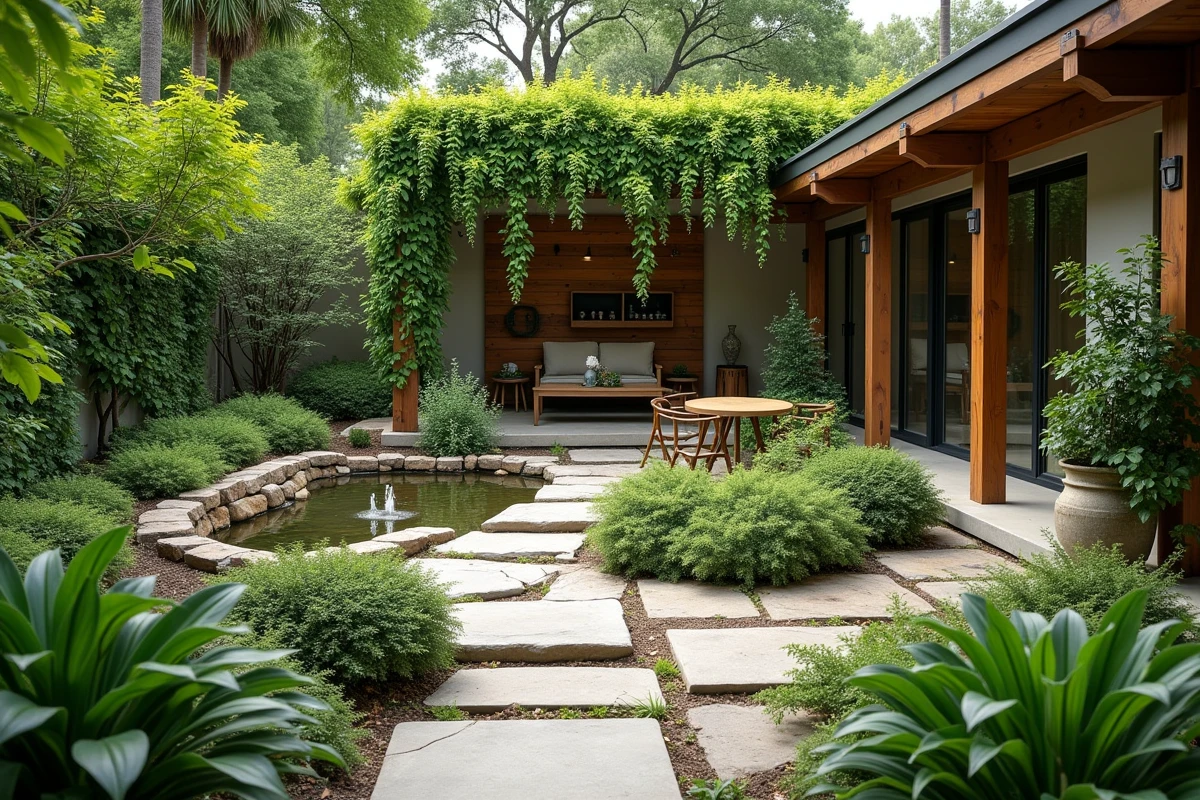
The design of an outdoor space relies on both technical and aesthetic choices. Available surface area, exposure, budget, desired maintenance level: each parameter points towards different solutions. These ten concrete ideas allow for comparing approaches and measuring their real impact on the comfort of a garden or terrace.
1. Water blade fountain to mask urban noise
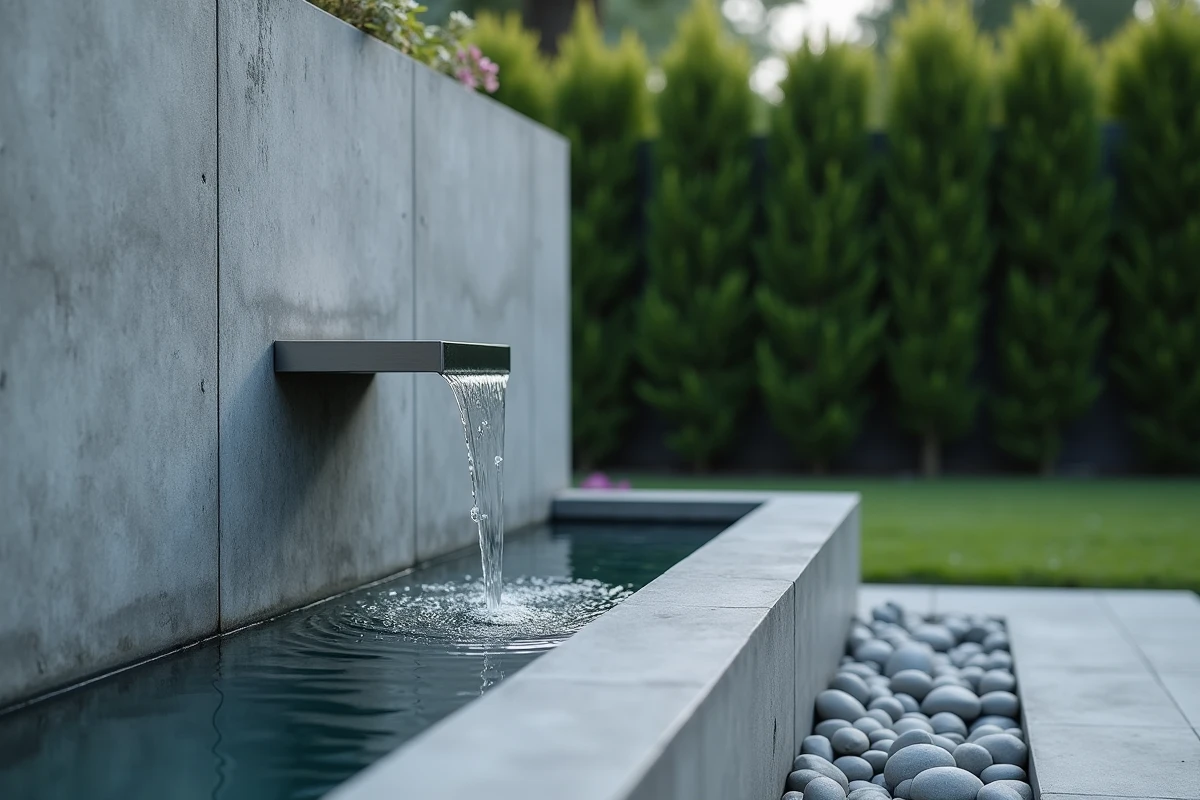
Bruitparif, the Noise Observatory in Île-de-France, cites passive devices like water blade fountains among the complementary measures to traditional acoustic protections. The principle is simple: the white noise generated by moving water reduces the perception of surrounding noise disturbances.
This type of installation works particularly well in courtyards and small city gardens, where walls reflect sounds. The flow remains low, and the electricity consumption of the recirculation pump is also minimal. Moving water enhances the perception of calm without requiring heavy construction work.
Among the ideas for outdoor space design, this one stands out for its dual role: visual decoration and acoustic comfort.
2. Warm dim solar lighting to preserve nocturnal wildlife
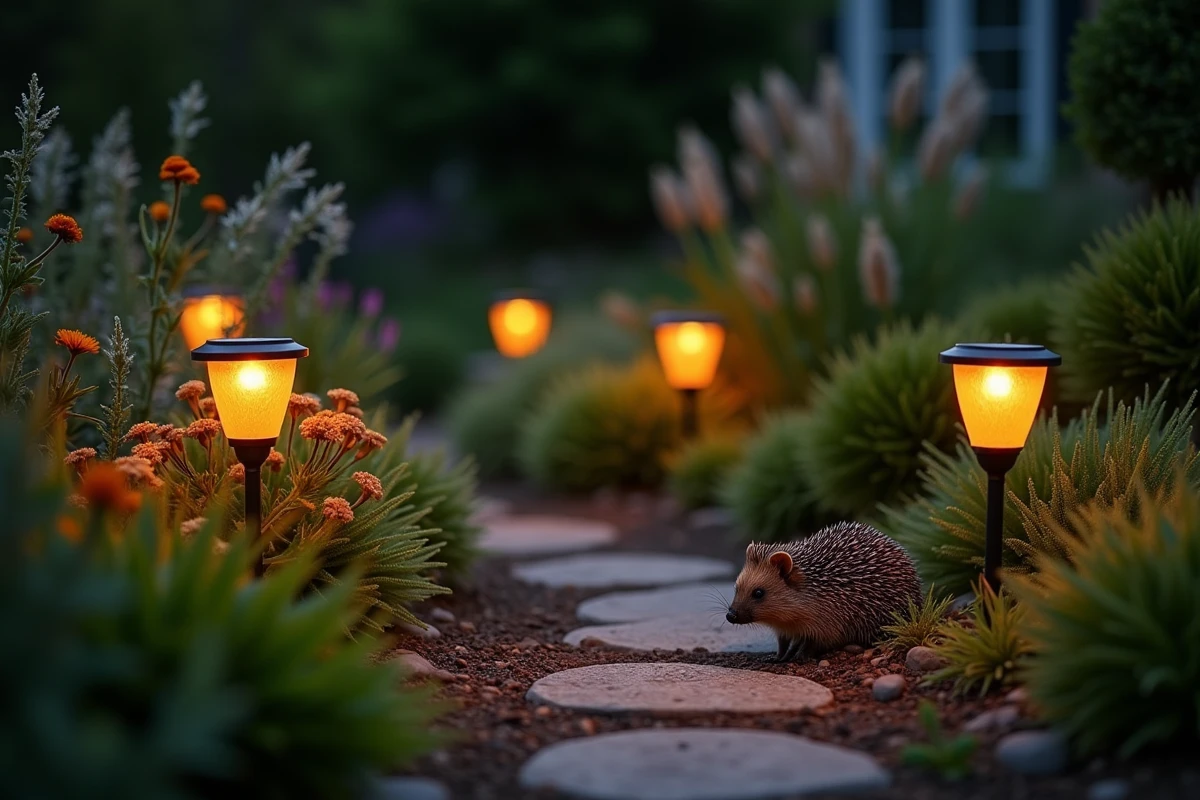
Since 2023, Ademe has noted a rise in solar lights with a color temperature below 3,000 K, known as “warm dim.” These lights limit light pollution and preserve the cycles of nocturnal wildlife (pollinating insects, bats).
In contrast to cool white LEDs, warm dim lights also improve the sleep quality of occupants according to Ademe’s updated reference sheets in 2024. Their solar autonomy eliminates the need for wiring, simplifying installation in an existing garden.
3. Ornamental grasses to create a sound garden
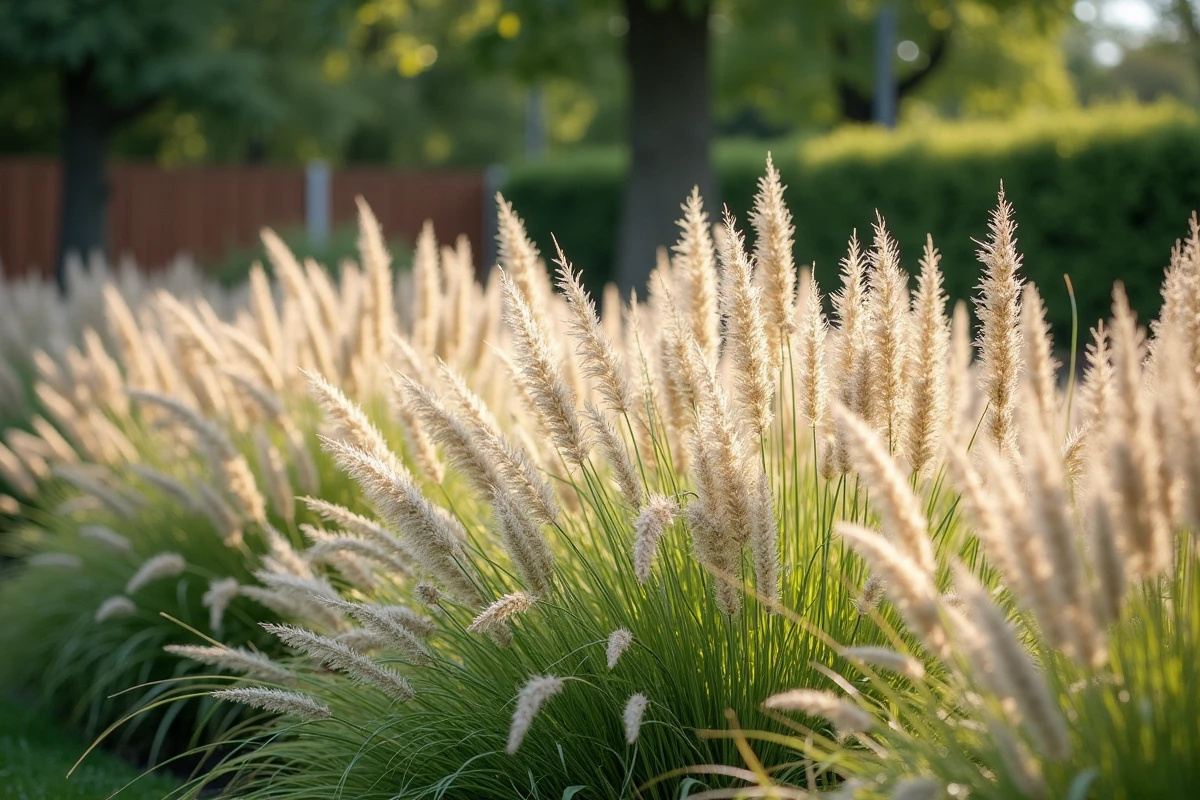
The trend of sound gardens, documented since 2022, is based on the integration of rustling plants. Grasses (miscanthus, stipa, pennisetum) produce a continuous rustling in the wind that helps mask ambient noise.
Combined with ponds or fountains, they create a passive acoustic landscape with no energy consumption. Their maintenance is limited to an annual trim at the end of winter. They adapt well to both large gardens and planters on terraces or balconies.
4. Composite material terrace to reduce maintenance
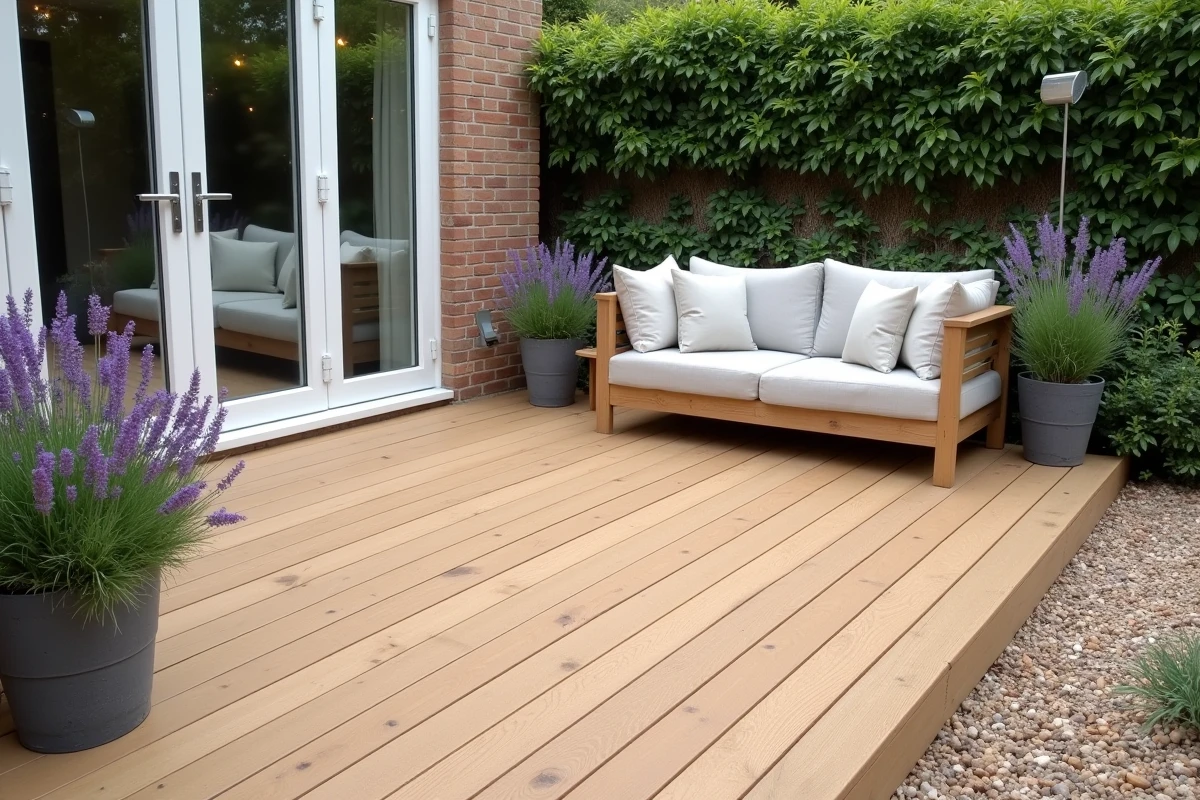
Natural wood requires regular treatment (stain, brightener). Composite wood-polymer boards offer superior durability against UV rays and moisture, without sanding or oiling.
The initial extra cost is offset by the almost total lack of maintenance over the product’s lifespan. The choice of color and finish (smooth, veined, striped) allows for style adaptation to the environment. For a balcony or small terrace, interlocking composite tiles can be installed in just a few hours.
5. Sensory pathway inspired by healing gardens
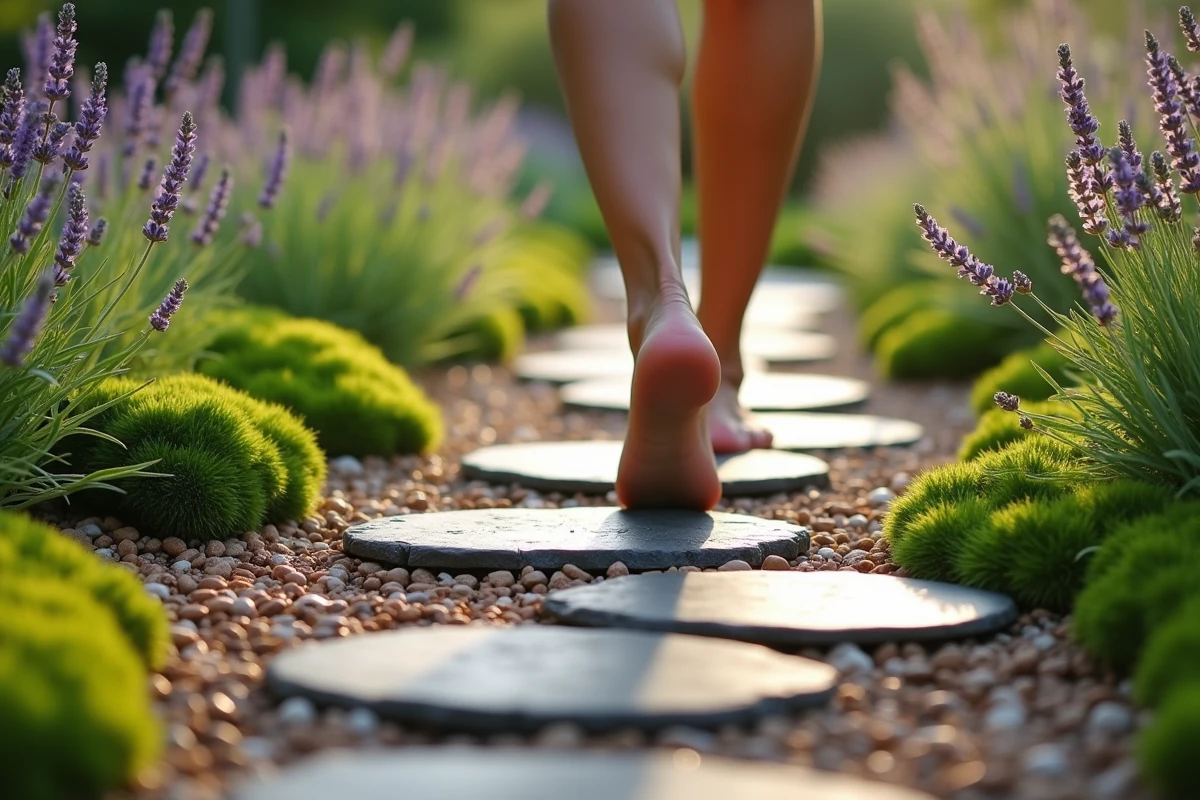
The Nantes University Hospital has documented since 2023 the positive impact of healing gardens on patients’ anxiety and sleep. The principle can be transposed to a private garden: alternating areas with different textures on the ground (gravel, stepping stones, grass), touchable plants (stachys, santolina), and fragrant plants (lavender, rosemary, mint).
A sensory pathway structures the garden while stimulating multiple senses. This type of design benefits both children and the elderly, and it works well on modest surfaces.
6. Bioclimatic pergola with adjustable slats
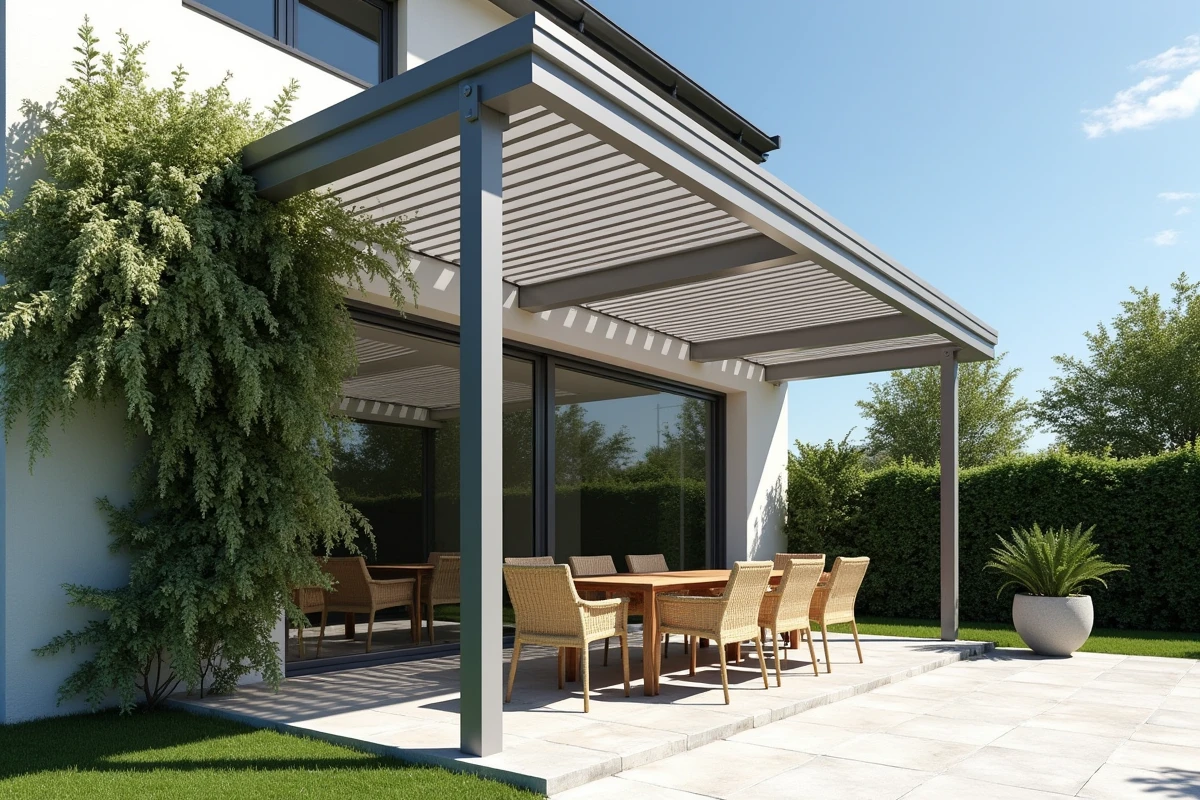
The bioclimatic pergola allows for modulation of sunlight and ventilation through adjustable slats. Closed, they protect from rain. Open, they let light and airflow through.
Compared to a traditional awning, the bioclimatic pergola offers significantly better wind resistance and a longer lifespan. Its cost is higher, but it adds a true outdoor living space usable from spring to autumn.
7. Raised garden beds to optimize a small space
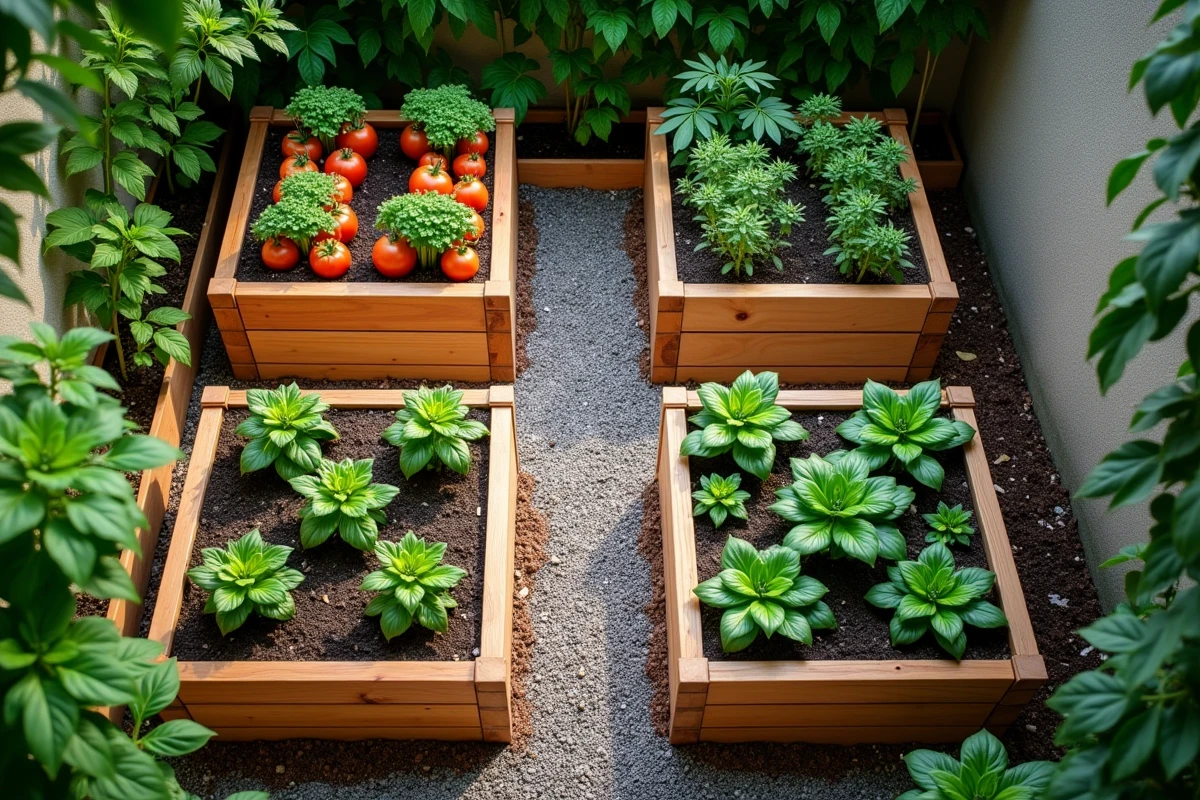
Raised beds allow for growing vegetables and herbs even on a balcony or terrace without direct soil. Comfortable working height, controlled drainage, chosen substrate: the raised garden bed eliminates the constraint of existing soil.
A square one meter on each side is enough to grow salads, cherry tomatoes, basil, and radishes in rotation. The integrated watering system with a water reservoir limits forgetfulness and waste.
8. Natural pond without chemicals
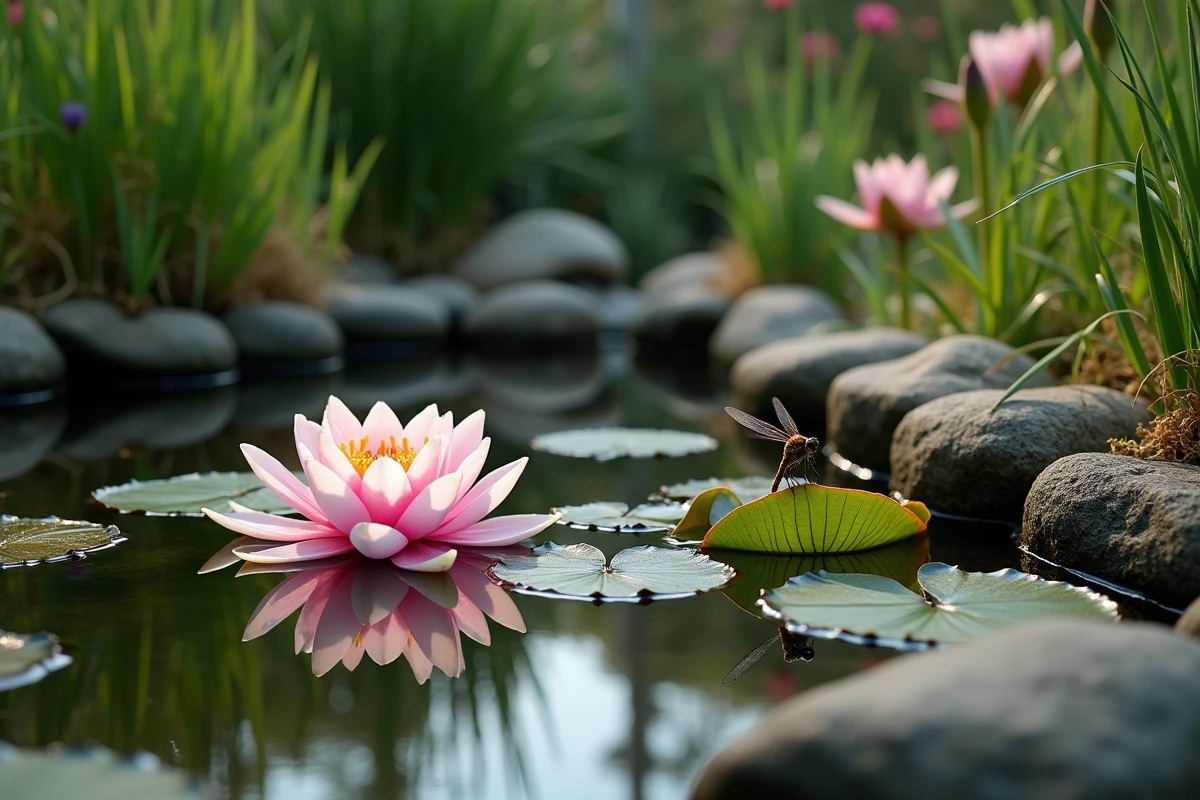
A natural swimming pond or a simple planted water point operates through biological filtration: aquatic plants (water irises, reeds, water lilies) purify the water without chlorine or chemicals.
The installation requires excavation and waterproofing (EPDM liner or bentonite clay). However, operating costs are very low since there are no chemical consumables. The pond attracts dragonflies, frogs, and birds, enhancing the garden’s biodiversity.
9. Vegetated screen to filter views
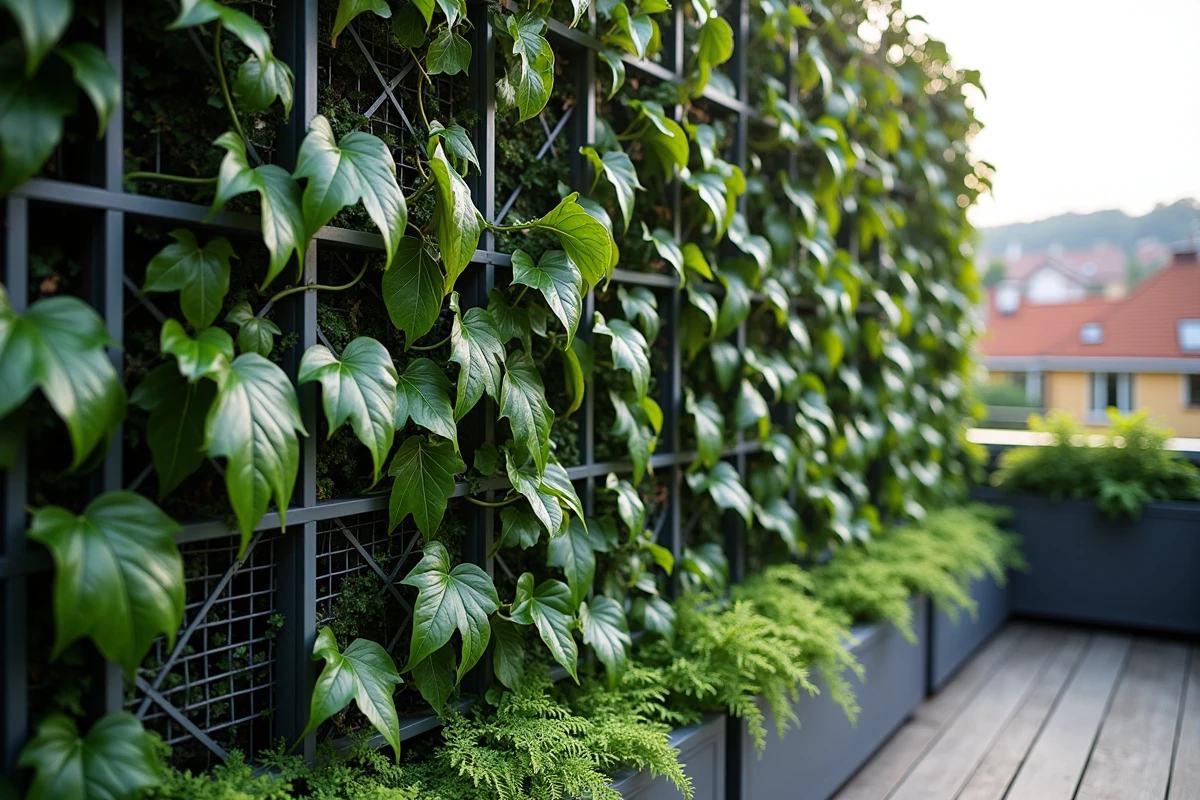
Rather than a solid wall or a hedge of thuja, the vegetated screen combines a lattice structure (wood, metal, composite) and climbing plants (star jasmine, honeysuckle, clematis). It filters views without blocking airflow or creating dense shade.
The vegetated screen offers privacy without creating a partitioning effect. The structure guides the growth of the plants, limiting the trimming compared to a free hedge. It is a solution suitable for urban shared walls.
10. Relaxation area with integrated masonry seating
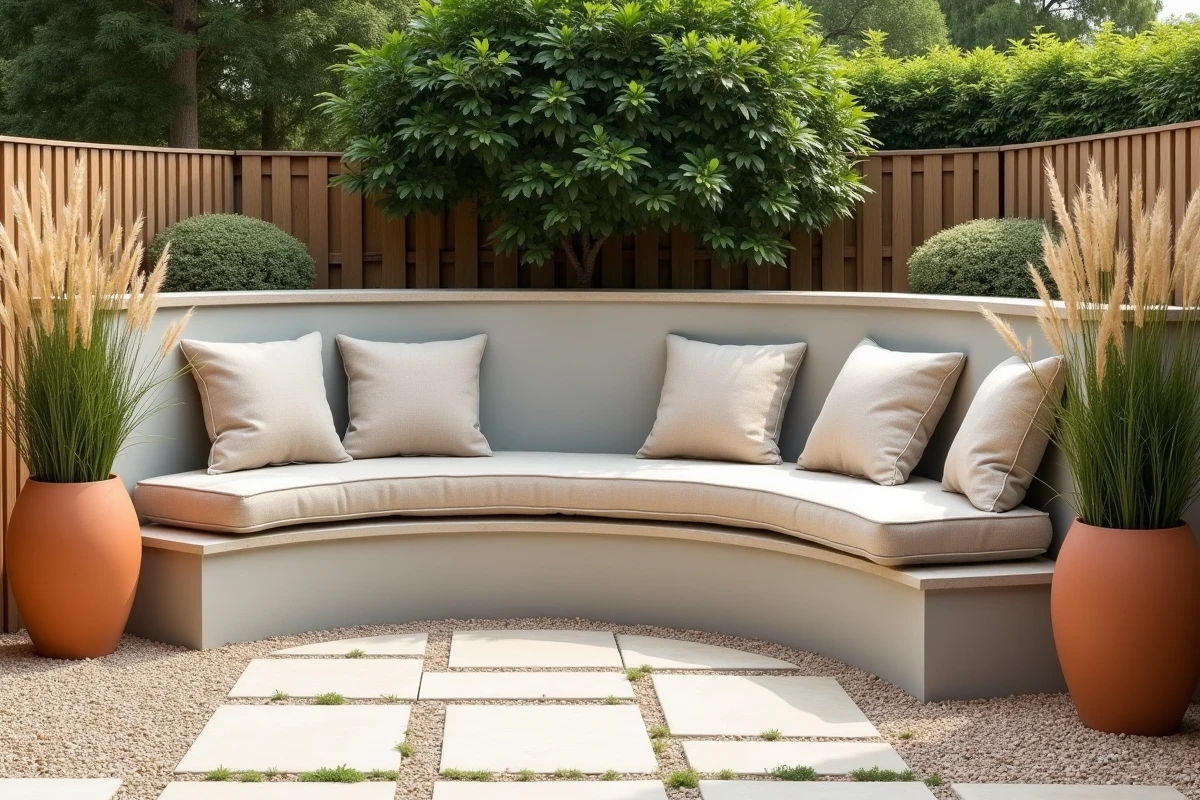
Masonry benches (rendered concrete blocks, reconstituted stone, polished concrete) replace traditional garden furniture in sheltered areas. They do not move in the wind, do not rust, and require no winter storage.
Adorned with outdoor cushions made from water-repellent fabric, they define a permanent relaxation space. A seating wall can also serve as a border for a flower bed or as a separation between two areas of the garden, doubling its function.
Each of these ten ideas acts on a different lever: acoustics, light, privacy, food production, biodiversity. The design of an outdoor space gains coherence when these functions are intertwined rather than treated separately. Starting from a concrete need (to shield from noise, reduce maintenance, cultivate) better guides choices than a catalog of decorative styles.